


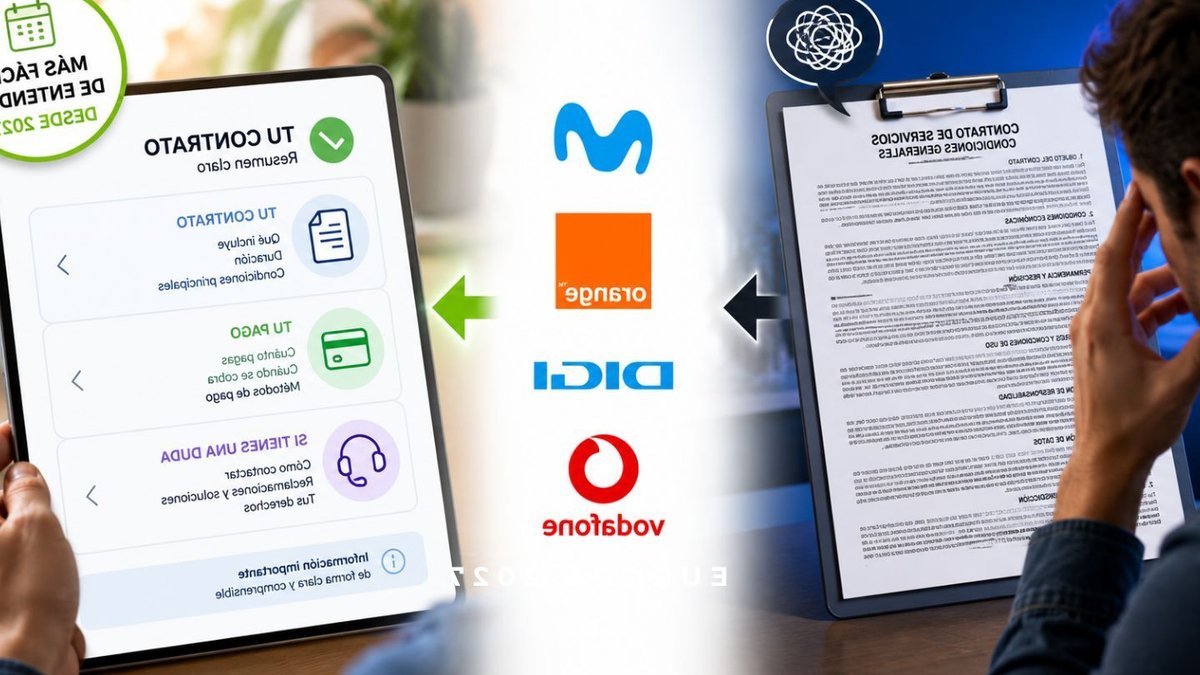
Spain’s official gazette published a decree this week that will force major telecom providers to rewrite how they communicate with customers. The changes take effect January 2nd, 2027, and apply to companies including Movistar, Orange, DIGI, and Vodafone.
What the decree requires
The Royal Decree 707/2026, dated September 2nd, establishes for the first time a national framework for cognitive accessibility. It targets telecommunications companies, internet service providers, and other businesses that sell goods or services to the public. Documents, forms, consent procedures, authentication processes, and payment systems will need to meet new standards for clarity.
Complaint forms must be available in an easy-to-read format. The decree also prohibits companies from passing adaptation costs to consumers. This means that customers will not have to bear the financial burden of making services more accessible. The decree aims to ensure that accessibility is not an optional extra that comes at an extra cost, but a fundamental right for all users.
The decree covers a wide range of customer interactions, including but not limited to, signing up for services, filing complaints, paying bills, and understanding changes in tariffs. It seeks to address the common problem of consumers struggling with complex legal language and forms, a situation that the decree aims to rectify.
For telecom companies, this means more than just translating information into simpler language. It also involves simplifying the structure of documents, using clear headings and paragraph breaks, and providing visual supports where appropriate. The goal is not just to provide information, but to make that information accessible and usable.
Who counts as having accessibility needs
The decree uses a broad definition of cognitive difficulties. Beyond people with intellectual disabilities, the text includes anyone facing barriers related to health conditions, age, poverty, illiteracy, or unfamiliarity with the language. This means that telecom companies cannot assume that all their customers have the same level of reading ability or understanding of legal jargon.
According to the decree, cognitive accessibility is not just about making information available to people with disabilities. It’s also about making information usable by people who may not have disabilities, but who might struggle with complex information due to other factors. This could include people with temporary health conditions, people who are new to the language, or people who are not familiar with the specific technology or service being offered.
The document specifically mentions Article 6, which directly addresses private telecom providers and online service companies operating in Spain. These businesses must now consider how someone with limited reading ability or cognitive challenges would interact with their platforms. They are required to test their services with a diverse range of users to ensure accessibility for all.
Related: Another regional channel airs two teams for free.
How contracts and tariffs must change
Basic commercial information will need to use plain language and include visual supports where helpful. The decree specifically calls out contracting, consent, and usage instructions as areas that have been neglected in the past. These are the aspects of telecom services that customers interact with most frequently, and where clarity is most key.
Contracting information, for instance, will need to clearly explain what services are being offered, what the terms of the contract are, and what the customer’s rights and obligations are. Consent procedures will need to make it clear what the customer is agreeing to, and how they can withdraw their consent if they change their mind. Usage instructions will need to explain how to use the service in a clear and understandable way.
The goal is not to make contracts into picture books, but to stop legal complexity from being used as a shield against consumer understanding. The decree aims to ensure that customers are not left bewildered by complex contracts and tariffs, but can make informed decisions about their services.
When telecom prices change, customers often face pressure to decide quickly whether to stay or switch providers. Under the new rules, the information driving those decisions must be genuinely comprehensible, not just technically present. This means that companies must provide clear explanations of price changes, their reasons, and how they affect the customer’s service and bill.
What this means for customers
Before January 2nd, understanding what you were signing up for or how to file a complaint depended largely on whether the company chose to explain things clearly. The decree shifts that dynamic. Companies will have legal obligations rather than just voluntary guidelines to follow.
For people who have struggled with dense contracts or confusing billing language, this represents a meaningful change in their relationship with service providers. It means that they can expect a higher level of clarity and accessibility from their telecom providers. The enforcement mechanism and how strictly regulators will interpret compliance remain to be seen, but the baseline expectation is now different.
The decree also means that customers can expect to see changes in the way they interact with their telecom providers. They can expect clearer, more accessible information, whether they’re signing up for a new service, filing a complaint, or managing their account. It’s a step towards making telecom services more inclusive and user-friendly for all.
